Two-Wheeled Therapy

Photo info: FUJIFILM X100T, 19mm, f/4, 1/1400 sec, ISO200
“Kiki” Cedar Park, 2020

Today I have the day off from work (actually the whole week!) so I decided to have a bit of fun riding my motorcycle around. Motorcycling is an intense experience, where all five senses are on overload. But I also spent some time practicing skills that need some work: u-turns at full lock. For these exercises, I went to the elementary school’s parking lot, which is perfect because I can use the parking space markers to gauge my progress.

My goal is to comfortably make u-turns in either direction, with the handlebars at their maximum position (full lock). The correct way to do this is to look at where you want to go (way over your shoulder), then turn the handlebars and initiate the turn. The trick is to keep the proper speed where you are slow enough that you can keep the handlebars at full lock, but with enough speed that you can lean over without dropping the bike. The secret is to use clutch control while revving the engine a bit to avoid stalling. If you are sensing that you are falling over, then you need to let out the clutch and let the engine power bring you up again. But not too much that you come out of the tight turn.

It’s a real skill to do this well, and only practice will allow you build up the muscle memory to feather the clutch to adjust the power without consciously thinking about it. It’s my one big apprehension when riding, so it’s worthwhile to take the time to make some progress! And even if I feel like I didn’t do such a good job with my skill training, I know that it is progress towards getting better!

In the afternoon, I went for a nice bicycle ride to relax a bit. Bicycling is a wonderful activity. Super fun and good exercise! Plus you can clear your mind and see some great sights. I always feel great after a ride, even if it is just around the block to pick up the mail, but it’s a real treat when the route takes me to see sights like this:
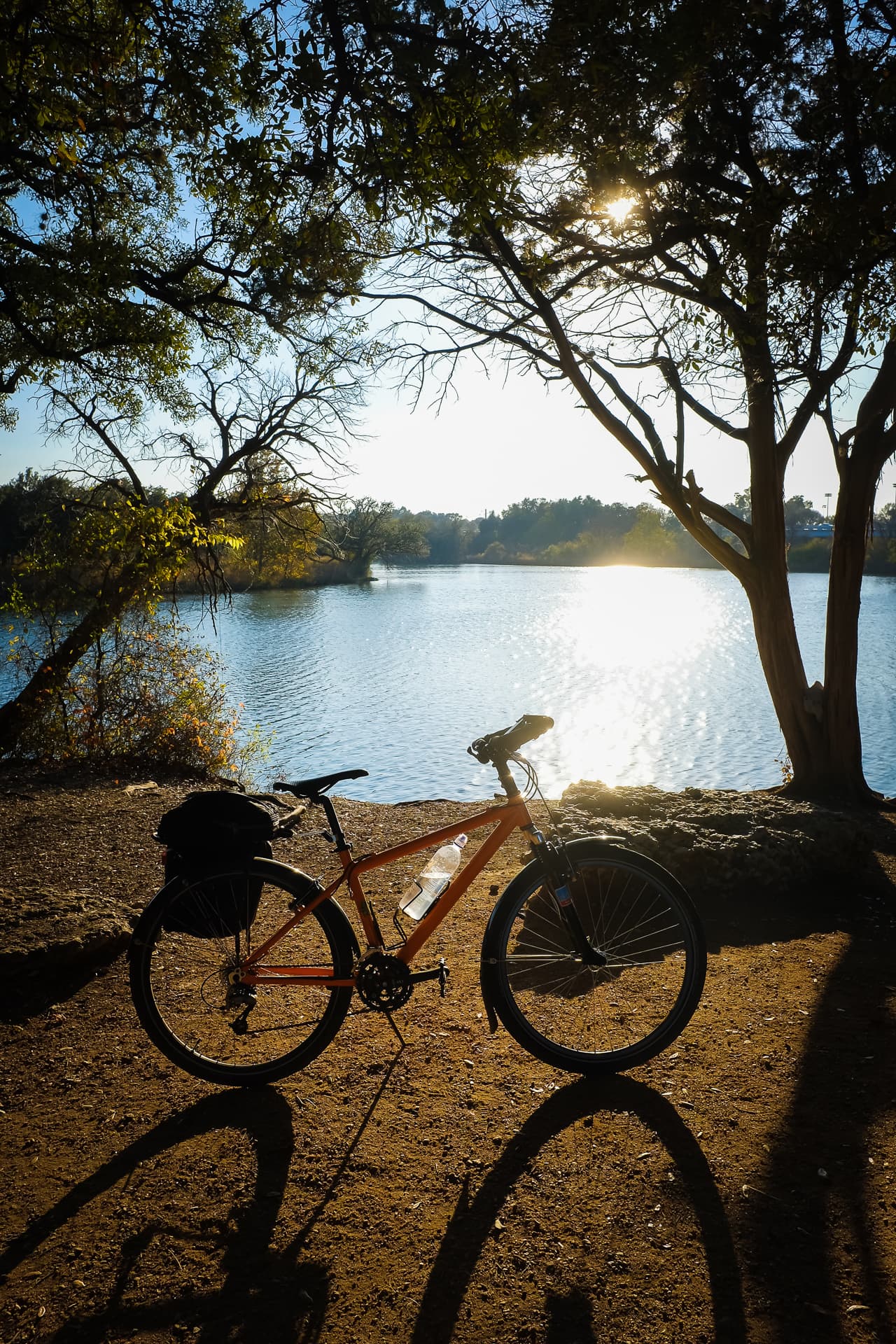
Photo info: FUJIFILM X100T, 19mm, f/7.1, 1/600 sec, ISO200
“Mango” Cedar Park, 2020

I hope you had a nice day!
My Fasting Experience

"On Her Perch" Cedar Park, 2016
Photo info: FUJIFILM X100T, 23mm, f/2.2, 1/110 sec, ISO200
“On Her Perch” Cedar Park, 2016

こんばんは!How’s it going?

These past couple weeks, I’ve been water-fasting quite a bit, with a 72-hour fast and a couple of 48-hour fasts. The rest of the days I just ate at dinner time. It’s been a great experience, and I feel a lot healthier! 😃

One of the main benefits for me is that I get a nice sense of control and self-confidence over food. The food industry is so powerful and influential, and they want us to eat more and more, so it’s been great to regain control and realize that I don’t have to eat as much as they tell me to. And I’m not going to die if I skip a meal!

It’s funny, but for as long as most of us have lived, we’ve been told to eat three meals a day (and then several small meals a day), that breakfast is the most important meal of the day, etc… but really, where did these rules come from? It’s been so ingrained in our culture that you need to eat eat eat. So if you mention that you are fasting, people are appalled and can’t understand. The belief is that it is so unhealthy, but where did that information come from? ❓

People have been fasting forever, and some of our wisest people recommended fasting for health. It’s really quite fascinating!

The first time I fasted, it was difficult, but once I broke through and completed a 36-hour fast, it became much easier to fast whenever I wanted. The sense of empowerment is incredible.

Anyways, enough about that. There’s so much more I want to say, but I’ll save it for another time. Please check it out all the information on water-fasting if you are interested!

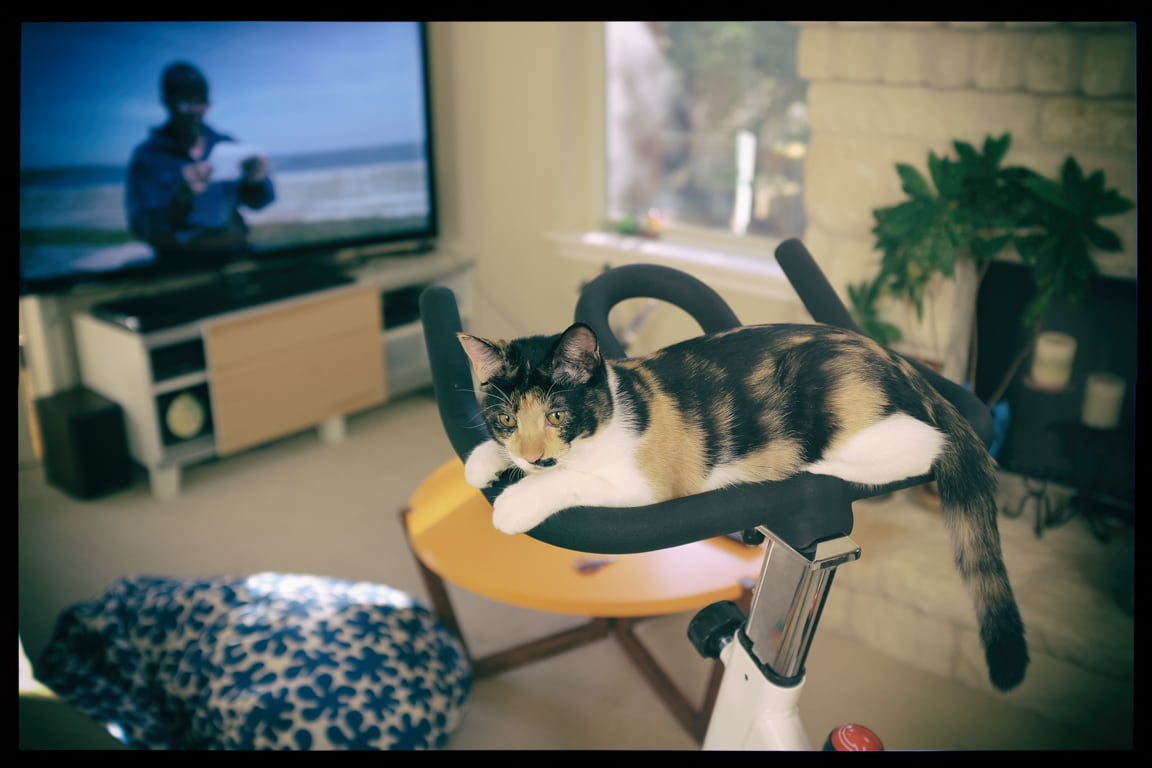
Tonight’s photo is of Yuzu, our calico cat. Both cats love to jump up to the exercise bike’s handlebars and hang out there. It reminds me of a jungle cat, relaxing in the tree. What do you think?

I hope you had a nice weekend!

おやすみなさい!

– B Barron Fujimoto

A-Z Challenge – U

U stands for “Upgrading”

We are constantly urged by ads and marketing to upgrade everything we have. For instance, phones, software, cars, gadgets, etc. In photography, we’re presented with new cameras and technology every year. The camera you just bought will be “obsolete” as soon as next year’s model comes out. There’s more and more megapixels, better high ISO sensitivity, faster AF… the list goes on and on!

When I bought my Fujifilm X100T last year, it made me realize that I didn’t have to upgrade my camera gear to improve my photography, or more importantly, get more enjoyment out of my hobby. I became more aware of the concept of “good enough” and the “satisficers” vs “maximizers” and found myself falling into the camp of the satisficers. This camera had less megapixels than my dslr, didn’t have as high a burst mode, and the video quality was worse. But it was definitely good enough, and the advantages of small size, low weight, simpler controls made it a far more enjoyable experience for me. “Good enough” actually brought me more joy than “maximizing”.

So, now I ask myself… why must I upgrade to the latest and greatest? Phones for instance… I find a low to mid-range smartphone good enough for me. I don’t have the urge to upgrade. Also, I use Adobe Lightroom every day, but I decided not to upgrade to the latest “Cloud” version… for me, version 5 was good enough. If I had the CC version, it would probably force me to upgrade my computer to keep up with the more powerful features that are regularly added. I don’t want to get forced into this cycle of upgrading!

It used to be a huge temptation for me to keep upgrading my things. But these days, I find happiness in settling for the “good enough” items, and I do not spend cycles worrying or researching to make sure I am at the cutting edge. For me, it’s a more satisfying way to live, and I can spend my energies elsewhere.

A-Z Challenge – K

K stands for “Konmari”

Lately I’ve been reading “The Life-Changing Magic of Tidying Up: The Japanese Art of Decluttering and Organizing” by Marie Kondo which is about decluttering your house and improving your life. The term “Konmari” comes from her first and last names and it’s kind of a Japanese way to make nicknames. For instance, Takuya Kimura from SMAP is known as “Kimutaku”, and pitcher Kenta Maeda is “Maeken”.

But nickname aside, this book is the latest in a string of books about decluttering and minimalism that I have read. I first became interested in decluttering about 15 years ago when I read “Clear Your Clutter with Feng Shui” by Karen Kingston. It was life-changing. I started throwing away so many things that I had kept that I did not need anymore. It felt great! I think I was reading the book late at night and got so motivated that at 2AM I found myself in my closet piling up old clothes to take to Goodwill!

The Konmari method is a little different, but the general idea is the same… only keep what gives you joy in your life, and discard the rest. And for the things you do keep, make sure they have a place to go. When your home is in order, you will be able to focus on the things in life that make you happy. Of course, the book is a lot more detailed about the techniques that she teaches to her clients. I am only about halfway through the book, and already it’s highly motivating and inspirational.

If you don’t know about decluttering, this is a good place to start!

A-Z Challenge – H

H is for “Humanism”

What is Humanism?

An outlook or system of thought attaching prime importance to human rather than divine or supernatural matters. Humanist beliefs stress the potential value and goodness of human beings, emphasize common human needs, and seek solely rational ways of solving human problems.

and

Humanism is a democratic and ethical life stance, which affirms that human beings have the right and responsibility to give meaning and shape to their own lives. It stands for the building of a more humane society through an ethic based on human and other natural values in the spirit of reason and free inquiry through human capabilities. It is not theistic, and it does not accept supernatural views of reality.

This is pretty much where I am, and where I have always been. I think it’s a healthy place to be.


A-Z Challenge – F

F is for “Fanatic”

My favorite sport is baseball, and growing up in the Los Angeles area, my favorite team was and still is the Dodgers. I’ve followed them, but I was never a fanatic. But a few years ago, I would listen to a game, and then get really angry when they lost. I would stress out over it when I was falling asleep even! Then, I got so disappointed in them when they got eliminated from the playoffs that I swore off baseball, and all sports. It was sort of in jest, but sort of serious. I really don’t understand how I could have that kind of emotional reaction to a team that I have no control over. It’s really weird!

But I didn’t want to feel that disappointment again, so I decided that I wouldn’t follow sports at all. I think that lasted a year or so, and then a change happened in me. I know it had something to do with when Koa started playing Little League baseball. During the first season, I would get so tense during the games, especially when the team made errors. I would get so nervous, that I didn’t even want to watch the game! I know, right? It was just like when I would watch the Dodgers!

The next season, I noticed that the kids, even if they lost, still had smiles on their faces and high-fived the other team after the game. Even though deep down I knew that winning wasn’t the most important thing about playing the game, I somehow lost sight of that. But seeing the joy on the kids’ faces made me realize that it was I who had the problem. My emotions were ridiculous! Once I realized that, my whole world (well, at least my sports world) changed. I now enjoy watching my son play the game and don’t mind the errors or strikeouts anymore. I make sure not to criticize him during the ride home after the game. I admit, I sometimes have the urge to say something, but that feeling is now minuscule compared to how it was during the first season. In fact, it’s so distant that I can see it far away… and laugh at it. What a great feeling!

The MLB season has just started, and I am watching a lot of the games. I think it will be a great season, not because I think the Dodgers will do well or win the World Series, but it will be a great season because I will enjoy the games without having the stressed-out mindset of a “fanatic”.

A-Z Challenge – E

E is for “Everything But the Girl”

So, this post is about one of my favorite bands, but not really about them or their music. I wanted to write about how their music changed during their careers, and how that change affected me.

I first started listening to Everything But the Girl (EBTG for short) in 1984 while in high school, and they became one of my favorite bands. At that time, they were sort of jazzy, kind of new-wave… definitely not mainstream (at least in the US). I saw them perform live in 1986 when they were touring promoting their album “Baby, the Stars Shine Bright”. That album featured an orchestra and was very different from the previous. I still enjoyed it, though. The next couple albums were similar, kind of adult contemporary, but then with “Amplified Heart” they went a new direction, and then “Walking Wounded” and “Temperamental” were pretty much full-on electronic music.

That last shift was a major one, and it really sounded like a completely different band than the EBTG of the ’80s. I actually had a hard time processing that change. Not anything serious or traumatic, of course, but I had this notion that in order to be “true to yourself”, you couldn’t change like that. So, the new direction the duo took was, to me, not the true EBTG.

Maybe I was too young to realize that people change as they grow older and gain new experiences. I believed that your personality (or music in the case of EBTG) shouldn’t change, and if it did, you were selling out.

Later I read an interview with Tracey Thorn (singer from EBTG) and she said something like, “The person who sang on that album no longer exists. I am a different person. I cannot sing someone else’s songs.” I’m sure that is not the exact quote, perhaps not even close, but it is what I remember reacting to. It was a bold statement… and a bit shocking. How could she say those things about the songs that I love so much?

But now I am older, and I realize that people do change… I don’t have the exact same interests as I did when I was young… for instance, I was very into painting when I was in my teens and early 20s, and earned an Art Studio degree, but these days, I have very little interest in painting. That person who went to Art School is very different now. It was who I was at the time and I am happy I experienced that. I can’t imagine a different reality. But that person exists in the past.

I’ve also noticed that people I’ve known for a long time, who were previously so into certain things, have lost interest in those things. That’s natural and okay. No need to beat yourself up or feel guilty over evolving! (I admit feeling a little guilty when I was in my 30s that I did not paint anymore)

But isn’t it great that we can change? Wouldn’t it be terrible if we were stuck as the same person we were 20 years ago? Isn’t it best to simply accept and be happy with who are at the present moment? I believe the answer is “yes” to all three questions.