Hello, Cloud. And Why I Cull My Photos.

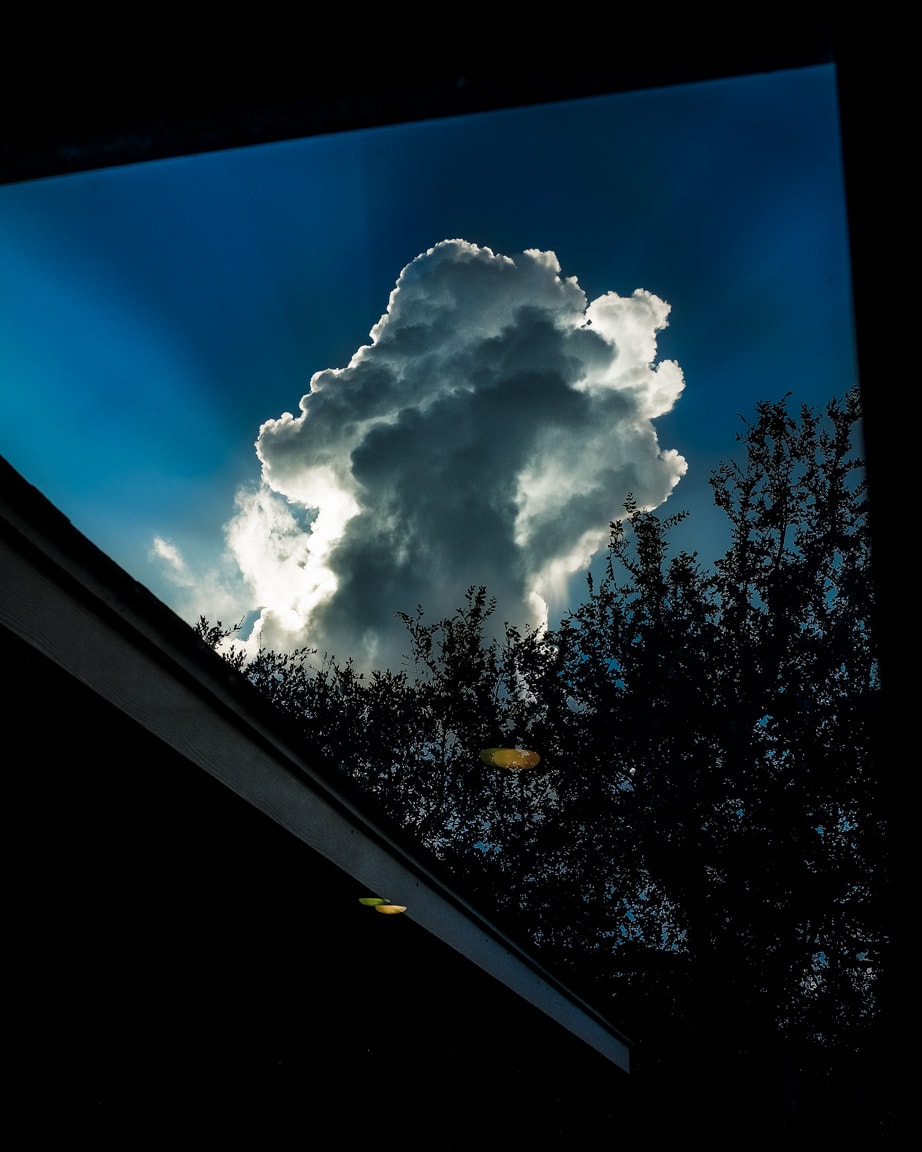
"Saying Hi" Cedar Park, 2016
Photo info: FUJIFILM X100T, 23mm, f/6.4, 1/950 sec, ISO400
“Saying Hi” Cedar Park, 2016

こんばんは!Hello, how’s it going?

Well, I didn’t expect to take another cloud photo for today’s snapshot, but as I was doing the dishes this evening, this beautiful cumulus specimen appeared over the trees to say hello. I couldn’t pass up the chance, so I shut off the water, grabbed my camera which was in the other room, then came back to the kitchen to take four photos of the cloud. I liked this one the best, and deleted the other three.

I am a big proponent of only keeping the best version of a series of photos if possible. In this case, the other three were simply different views of the same scene, some farther away from the window, and some closer. The photo above was the image that I felt was framed the best by the window, so it became the “keeper” and the other three got the “X” (marked for deletion).

I’ve heard people say that you should never delete any of your photos. Storage is cheap, after all. It doesn’t cost anything extra to keep every single photo you take, right? While this may be true, I personally found that I was paying the price in speed. The large amount of images was bloating my Lightroom catalog and slowing things down.

Conversely, by only keeping one photo from a series of images, my Lightroom catalog is lighter and more responsive. Plus there’s less visual clutter when I scroll through the catalog, or when I browse my images online at photos.google.com. I can scan quickly. I don’t have to wade though a bunch of mediocre versions of the same subject (and believe me when I say that I capture a TON of mediocre images!).

For me, it’s important to cull the photos soon after Iimport them into Lightroom or copy them to my computer. (I even try to delete photos before that in-camera) The quicker I get rid of those photos, the less time they have to make an imprint in my mind. I believe everything takes a portion of the brain’s attention, even a tiny bit of my subconscious. So, once the photos cease to exist, it frees that part of my brain’s hard drive, as well as my computer’s hard drive. At least that is what I believe. 😌

When I first began culling my photos, it wasn’t easy to delete photos. Yes, I was a digital hoarder at the time! But one thing that helped me was to imagine that my Lightroom catalog was a slideshow that I would be presenting to an audience. Would I want to show them 4 pictures of the same cloud? No way. They would get bored (and annoyed) quickly. I would pick the best photo to show them, and respect their time and attention. So why wouldn’t I treat myself with the same respect?

Once I got comfortable with culling quickly, it became easy, and it actually became fun! Making decisions and not looking back or regretting my actions gave me a sense of control. It won’t change the world, but it did affect the way I felt. Plus, once you start decluttering, it just snowballs and it feels great!

Okay, I seem to have rambled on a bit (again). So, back to the photo at hand…

For the Lightroom edit, it was similar to my previous post’s photo, with the addition of selective white balance. I gave the cloud a warmer tone, and the sky a cooler tone. That’s it! I’d estimate that I spent about 4 minutes in Lightroom before exporting.

I hope you had a nice day today. Let’s have a great Friday to close out the work week!

As always, if you have a comment or question, let me know.

おやすみなさい! – B Barron Fujimoto

A-Z Challenge – U

U stands for “Upgrading”

We are constantly urged by ads and marketing to upgrade everything we have. For instance, phones, software, cars, gadgets, etc. In photography, we’re presented with new cameras and technology every year. The camera you just bought will be “obsolete” as soon as next year’s model comes out. There’s more and more megapixels, better high ISO sensitivity, faster AF… the list goes on and on!

When I bought my Fujifilm X100T last year, it made me realize that I didn’t have to upgrade my camera gear to improve my photography, or more importantly, get more enjoyment out of my hobby. I became more aware of the concept of “good enough” and the “satisficers” vs “maximizers” and found myself falling into the camp of the satisficers. This camera had less megapixels than my dslr, didn’t have as high a burst mode, and the video quality was worse. But it was definitely good enough, and the advantages of small size, low weight, simpler controls made it a far more enjoyable experience for me. “Good enough” actually brought me more joy than “maximizing”.

So, now I ask myself… why must I upgrade to the latest and greatest? Phones for instance… I find a low to mid-range smartphone good enough for me. I don’t have the urge to upgrade. Also, I use Adobe Lightroom every day, but I decided not to upgrade to the latest “Cloud” version… for me, version 5 was good enough. If I had the CC version, it would probably force me to upgrade my computer to keep up with the more powerful features that are regularly added. I don’t want to get forced into this cycle of upgrading!

It used to be a huge temptation for me to keep upgrading my things. But these days, I find happiness in settling for the “good enough” items, and I do not spend cycles worrying or researching to make sure I am at the cutting edge. For me, it’s a more satisfying way to live, and I can spend my energies elsewhere.

A-Z Challenge – K

K stands for “Konmari”

Lately I’ve been reading “The Life-Changing Magic of Tidying Up: The Japanese Art of Decluttering and Organizing” by Marie Kondo which is about decluttering your house and improving your life. The term “Konmari” comes from her first and last names and it’s kind of a Japanese way to make nicknames. For instance, Takuya Kimura from SMAP is known as “Kimutaku”, and pitcher Kenta Maeda is “Maeken”.

But nickname aside, this book is the latest in a string of books about decluttering and minimalism that I have read. I first became interested in decluttering about 15 years ago when I read “Clear Your Clutter with Feng Shui” by Karen Kingston. It was life-changing. I started throwing away so many things that I had kept that I did not need anymore. It felt great! I think I was reading the book late at night and got so motivated that at 2AM I found myself in my closet piling up old clothes to take to Goodwill!

The Konmari method is a little different, but the general idea is the same… only keep what gives you joy in your life, and discard the rest. And for the things you do keep, make sure they have a place to go. When your home is in order, you will be able to focus on the things in life that make you happy. Of course, the book is a lot more detailed about the techniques that she teaches to her clients. I am only about halfway through the book, and already it’s highly motivating and inspirational.

If you don’t know about decluttering, this is a good place to start!

A-Z Challenge – D

D is for “Digital Decluttering”

I am a big fan of decluttering, both physical “stuff” and digital as well. The digital version is a little different in that its goal (at least for me) is to remove the things that waste my time, or that I don’t find valuable. For instance, I used to love browsing my Facebook feed but eventually found it unfulfilling in the long run. It was entertaining sometimes but ultimately I didn’t actually learn anything from my feed and I realized that I’d rather spend my time reading, watching travel shows or photography videos, or looking at my Feedly feed, which is easier to filter down to things I am interesting in seeing. I rarely check Facebook any more, and if I do go to Facebook, I’m just following someone’s link.

As for my Instagram feed (and Flickr too), I unfollowed a lot of people who I had followed since I started using Instagram. At first I felt bad unfollowing them, but you know, tastes change over time and it’s not healthy to try to stay with interests that aren’t relevant any longer. Gotta move on at some point! But who knows, someday I might become interested in that kind of photography again and I will re-follow the same people. But it’s not something I can force… it just has to happen naturally. The point is to not hold onto things that aren’t valuable anymore.

On another level, I like to delete old bookmarks that I have never gone back to (and may even be broken). Although it seems like these bookmarks are “out-of-sight, out-of-mind”, I believe that they still take up space in my subconscious. And anyways, when I click on a bookmarks folder, having less to look through means it is easier and faster to find the bookmarks I do use.

For my devices, I recently bought a Chromebook. It’s a laptop, but it basically just runs the Chrome browser. Many people think that this limitation makes Chromebooks less valuable, but I have found that placing limits on things is liberating. What I mean is that since large programs like Photoshop or Office cannot be installed on it, the purpose of the Chromebook is straightforward, streamlined, and simple. It’s not burdened by bloatware, so the things that it can do, it does very fast. It doesn’t have to load extra programs into memory, or start up a huge OS. In fact, it boots up in just a few seconds, and the battery lasts 10 hours. It’s a great blogging machine, and wonderful for watching Netflix.

These are just a few things in which digital decluttering improves my life. It works for me, and I think decluttering might help a lot of other people simplify their digital lives, and get them valuable time back.

Culling photos and RAW vs JPEG

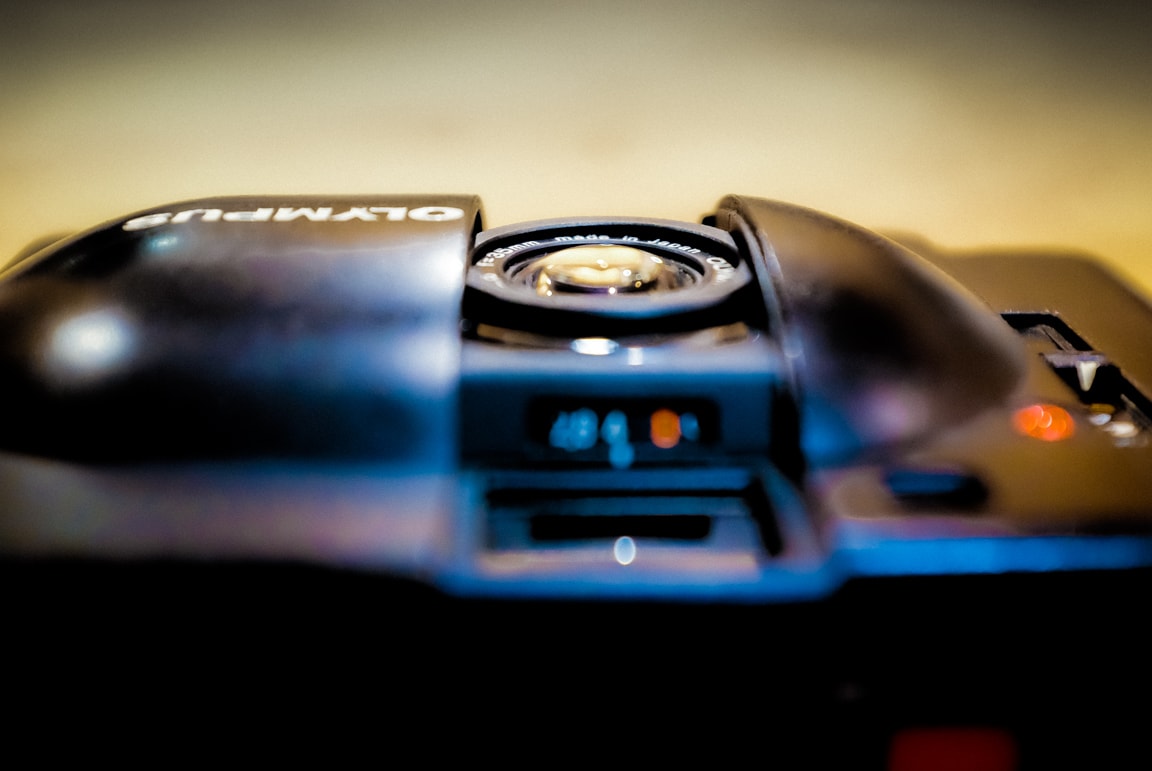
"Olympus XA" Cedar Park, 2016
Photo info: FUJIFILM X100T, 23mm, f/3.6, 1/25 sec, ISO6400
“Olympus XA” Cedar Park, 2016

こんばんは!How’s it going? Over here, it’s raining… make sure to keep dry and stay healthy!

Today’s photo is of one of my favorite cameras, the mighty Olympus XA. It is such a great design, and takes wonderful photos because of the lovely Zuiko lens. I love it, although I don’t shoot with it too often.

Tonight I replied to a post on Flickr that was concerning running out of hard drive space because of shooting many RAW files. In writing my response, I thought about how my philosophy on making photos has changed over the years to where I am now, which is a happy place. Not surprisingly, it has to do with decluttering. Below is the response I posted:

———

Just my personal experience…

Short answer: It helps if you cull your photos early on, and be “ruthless” about it. :)

Long-winded answer:

I think many of us have gone through or are going through a similar situation, myself included. There was a time when I was shooting so much, in RAW, kept everything, was running out of space, and “got behind” in processing those files. Photography started being less fun for me.

Then, I started shooting some corporate events and my view on culling the photos started to take shape. Each time I clicked the shutter, I would think “This photo is going to take me X amount of minutes to process.” This left a feeling of dread – I didn’t want to stay up all night processing so many! So I decided I needed to cull more aggressively. Now, if I shoot one event presenter, I might take 40 shots, but immediately (in camera) cull that down to 15, deleting obvious ones like closed eyes, weird mid-talk expressions, etc. Then later in Lightroom, I’d spend one minute to cut that to 3 maximum (more for a keynote), and post-process those.

I then started applying that to my personal work. I found that choosing the best ones in-camera soon after I took them made photography a lot more enjoyable. The sooner I deleted the rejected photos, the less I would think about them and consequently eliminate any regret I might have had in not keeping them. (I didn’t have time to get attached to those photos) And my memory card felt nice and tidy, free of clutter.

Another change that really helped me enjoy photography more is that I now shoot exclusively (for my personal photos) in JPEG. I have found that committing to the image immediately gives me a sense of closure and peace-of-mind. This may sound weird, but to me, a RAW file is the middle step in the photographic process, with the end of the process being a print or JPEG. It’s like the RAW file represents an unfinished project (with endless possibilities) and when I had 1,000 RAW files sitting on my hard drive, it was like having 1,000 unfinished projects just gnawing away at me. (I guess I have some issues!)

So now I cull like crazy, and I’m happy with (or at least committed to) the images I keep, and forget about all the others… it’s a lot less clutter on the hard drive and less clutter in my mind.

Sorry for the long-winded (and somewhat off-topic) message, and thanks for reading.

———

I hope you have a nice rest of the evening, and let’s do our best tomorrow!

おやすみなさい!

-B Barron Fujimoto