A-Z Challenge – U

U stands for “Upgrading”

We are constantly urged by ads and marketing to upgrade everything we have. For instance, phones, software, cars, gadgets, etc. In photography, we’re presented with new cameras and technology every year. The camera you just bought will be “obsolete” as soon as next year’s model comes out. There’s more and more megapixels, better high ISO sensitivity, faster AF… the list goes on and on!

When I bought my Fujifilm X100T last year, it made me realize that I didn’t have to upgrade my camera gear to improve my photography, or more importantly, get more enjoyment out of my hobby. I became more aware of the concept of “good enough” and the “satisficers” vs “maximizers” and found myself falling into the camp of the satisficers. This camera had less megapixels than my dslr, didn’t have as high a burst mode, and the video quality was worse. But it was definitely good enough, and the advantages of small size, low weight, simpler controls made it a far more enjoyable experience for me. “Good enough” actually brought me more joy than “maximizing”.

So, now I ask myself… why must I upgrade to the latest and greatest? Phones for instance… I find a low to mid-range smartphone good enough for me. I don’t have the urge to upgrade. Also, I use Adobe Lightroom every day, but I decided not to upgrade to the latest “Cloud” version… for me, version 5 was good enough. If I had the CC version, it would probably force me to upgrade my computer to keep up with the more powerful features that are regularly added. I don’t want to get forced into this cycle of upgrading!

It used to be a huge temptation for me to keep upgrading my things. But these days, I find happiness in settling for the “good enough” items, and I do not spend cycles worrying or researching to make sure I am at the cutting edge. For me, it’s a more satisfying way to live, and I can spend my energies elsewhere.
A-Z Challenge – K

K stands for “Konmari”

Lately I’ve been reading “The Life-Changing Magic of Tidying Up: The Japanese Art of Decluttering and Organizing” by Marie Kondo which is about decluttering your house and improving your life. The term “Konmari” comes from her first and last names and it’s kind of a Japanese way to make nicknames. For instance, Takuya Kimura from SMAP is known as “Kimutaku”, and pitcher Kenta Maeda is “Maeken”.

But nickname aside, this book is the latest in a string of books about decluttering and minimalism that I have read. I first became interested in decluttering about 15 years ago when I read “Clear Your Clutter with Feng Shui” by Karen Kingston. It was life-changing. I started throwing away so many things that I had kept that I did not need anymore. It felt great! I think I was reading the book late at night and got so motivated that at 2AM I found myself in my closet piling up old clothes to take to Goodwill!

The Konmari method is a little different, but the general idea is the same… only keep what gives you joy in your life, and discard the rest. And for the things you do keep, make sure they have a place to go. When your home is in order, you will be able to focus on the things in life that make you happy. Of course, the book is a lot more detailed about the techniques that she teaches to her clients. I am only about halfway through the book, and already it’s highly motivating and inspirational.

If you don’t know about decluttering, this is a good place to start!

A-Z Challenge – D

D is for “Digital Decluttering”

I am a big fan of decluttering, both physical “stuff” and digital as well. The digital version is a little different in that its goal (at least for me) is to remove the things that waste my time, or that I don’t find valuable. For instance, I used to love browsing my Facebook feed but eventually found it unfulfilling in the long run. It was entertaining sometimes but ultimately I didn’t actually learn anything from my feed and I realized that I’d rather spend my time reading, watching travel shows or photography videos, or looking at my Feedly feed, which is easier to filter down to things I am interesting in seeing. I rarely check Facebook any more, and if I do go to Facebook, I’m just following someone’s link.

As for my Instagram feed (and Flickr too), I unfollowed a lot of people who I had followed since I started using Instagram. At first I felt bad unfollowing them, but you know, tastes change over time and it’s not healthy to try to stay with interests that aren’t relevant any longer. Gotta move on at some point! But who knows, someday I might become interested in that kind of photography again and I will re-follow the same people. But it’s not something I can force… it just has to happen naturally. The point is to not hold onto things that aren’t valuable anymore.

On another level, I like to delete old bookmarks that I have never gone back to (and may even be broken). Although it seems like these bookmarks are “out-of-sight, out-of-mind”, I believe that they still take up space in my subconscious. And anyways, when I click on a bookmarks folder, having less to look through means it is easier and faster to find the bookmarks I do use.

For my devices, I recently bought a Chromebook. It’s a laptop, but it basically just runs the Chrome browser. Many people think that this limitation makes Chromebooks less valuable, but I have found that placing limits on things is liberating. What I mean is that since large programs like Photoshop or Office cannot be installed on it, the purpose of the Chromebook is straightforward, streamlined, and simple. It’s not burdened by bloatware, so the things that it can do, it does very fast. It doesn’t have to load extra programs into memory, or start up a huge OS. In fact, it boots up in just a few seconds, and the battery lasts 10 hours. It’s a great blogging machine, and wonderful for watching Netflix.

These are just a few things in which digital decluttering improves my life. It works for me, and I think decluttering might help a lot of other people simplify their digital lives, and get them valuable time back.

Culling photos and RAW vs JPEG

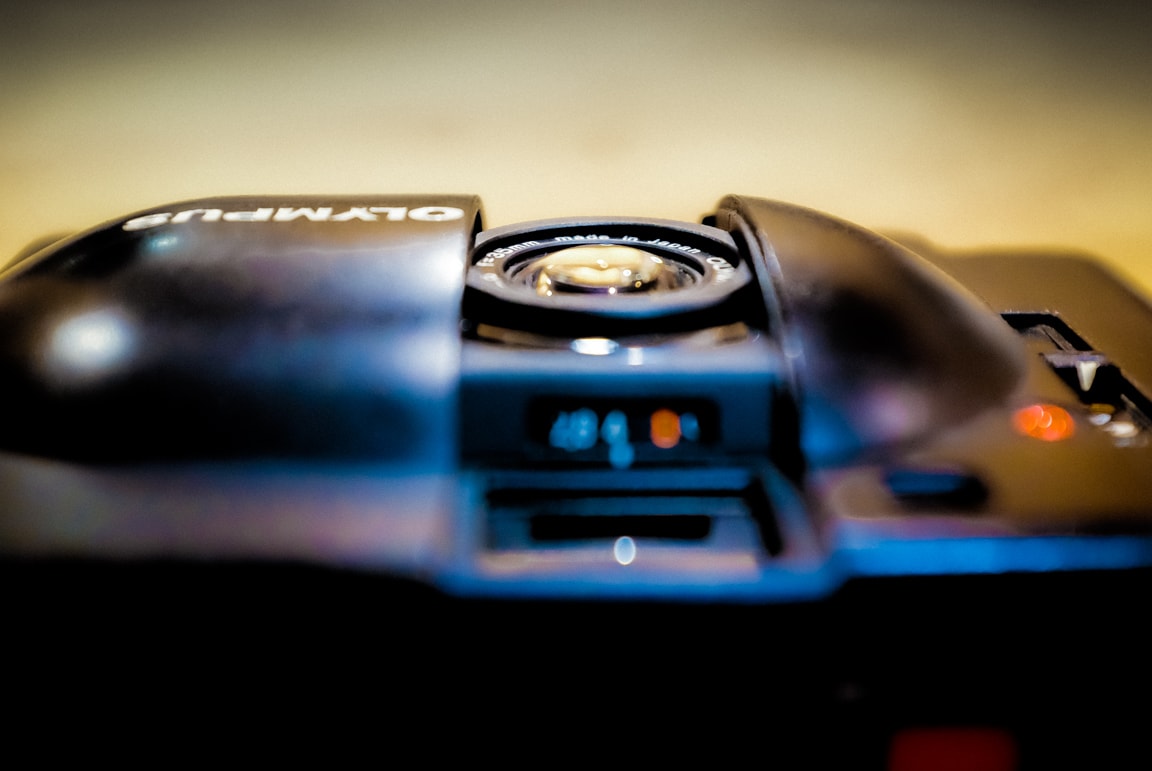
"Olympus XA" Cedar Park, 2016
Photo info: FUJIFILM X100T, 23mm, f/3.6, 1/25 sec, ISO6400
“Olympus XA” Cedar Park, 2016

こんばんは!How’s it going? Over here, it’s raining… make sure to keep dry and stay healthy!

Today’s photo is of one of my favorite cameras, the mighty Olympus XA. It is such a great design, and takes wonderful photos because of the lovely Zuiko lens. I love it, although I don’t shoot with it too often.

Tonight I replied to a post on Flickr that was concerning running out of hard drive space because of shooting many RAW files. In writing my response, I thought about how my philosophy on making photos has changed over the years to where I am now, which is a happy place. Not surprisingly, it has to do with decluttering. Below is the response I posted:

———

Just my personal experience…

Short answer: It helps if you cull your photos early on, and be “ruthless” about it. :)

Long-winded answer:

I think many of us have gone through or are going through a similar situation, myself included. There was a time when I was shooting so much, in RAW, kept everything, was running out of space, and “got behind” in processing those files. Photography started being less fun for me.

Then, I started shooting some corporate events and my view on culling the photos started to take shape. Each time I clicked the shutter, I would think “This photo is going to take me X amount of minutes to process.” This left a feeling of dread – I didn’t want to stay up all night processing so many! So I decided I needed to cull more aggressively. Now, if I shoot one event presenter, I might take 40 shots, but immediately (in camera) cull that down to 15, deleting obvious ones like closed eyes, weird mid-talk expressions, etc. Then later in Lightroom, I’d spend one minute to cut that to 3 maximum (more for a keynote), and post-process those.

I then started applying that to my personal work. I found that choosing the best ones in-camera soon after I took them made photography a lot more enjoyable. The sooner I deleted the rejected photos, the less I would think about them and consequently eliminate any regret I might have had in not keeping them. (I didn’t have time to get attached to those photos) And my memory card felt nice and tidy, free of clutter.

Another change that really helped me enjoy photography more is that I now shoot exclusively (for my personal photos) in JPEG. I have found that committing to the image immediately gives me a sense of closure and peace-of-mind. This may sound weird, but to me, a RAW file is the middle step in the photographic process, with the end of the process being a print or JPEG. It’s like the RAW file represents an unfinished project (with endless possibilities) and when I had 1,000 RAW files sitting on my hard drive, it was like having 1,000 unfinished projects just gnawing away at me. (I guess I have some issues!)

So now I cull like crazy, and I’m happy with (or at least committed to) the images I keep, and forget about all the others… it’s a lot less clutter on the hard drive and less clutter in my mind.

Sorry for the long-winded (and somewhat off-topic) message, and thanks for reading.

———

I hope you have a nice rest of the evening, and let’s do our best tomorrow!

おやすみなさい!

-B Barron Fujimoto

Good enough

I posted the photo below to my Instagram account and it got me thinking about why I pared down the amount of camera gear I use. It’s kind of a shift in thinking for me that has taken place the last year. I am now completely satisfied with “good enough”.

"My 2016 Camera Kit" USA. Texas. Cedar Park. 2016.
Photo info: FUJIFILM X-T10, 26.5mm, f/6.4, 1/55 sec, ISO3200
“My 2016 Camera Kit” USA. Texas. Cedar Park. 2016.

I have already blogged a bit about the benefits of simplifying the amount of camera gear I use, but one of the reasons why I can do it (and still be happy) is that the cameras in the photo are “good enough” for what I want to photograph. Specifically, the size of the images is more than enough for me. When I was using my Konica-Minolta 7D DSLR, I was already satisifed with 6 megapixels! My wishlist for future cameras just included low-light sensitivity.

When I upgraded to the Sony A77, the 24 megapixel images were huge, especially when I started shooting RAW! I realize now that it was overkill for my shooting style. And that is the important part… each person’s shooting style should dictate what camera they should use. For instance, I don’t shoot sports so I don’t have need for high-frame-rates. My X100T can shoot at 6 FPS which is “good enough”. I do not photograph wildlife or birds so I do not need a long telephoto lens. If I need to get closer, I have my legs. That is “good enough”. My photos will not be used on billboards so I do not need a 50 megapixel sensor. My cameras have 16 and 12 megapixels. And that is more than “good enough”.

So, what is the benefit of settling for “good enough”? Well, in the case of the camera, I am no longer suffering from “GAS” which stand for “Gear Acquisition Syndrome”. I don’t need to think about upgrading any longer. Sure, it is still fun to see the new cameras and technological advances, but now all of these new things do not have the pull on me that they once did. I actually think to myself how nice it is to NOT have the desire for the newest gear. I really feels great! And it is nice for my wallet too!

So now that I have experienced that with my camera gear, I am trying to think of how to apply the “good enough” philosophy to the rest of my life. I haven’t thought too much about it yet, but I am excited to see what unfolds.

I believe everyone should think about what is “good enough” for themselves, and not worry about maximizing on everything. Just use what makes you happy, then let go of the desire to buy more stuff. Enjoy what you have!

Back Home

Hi all! How are you today/tonight?

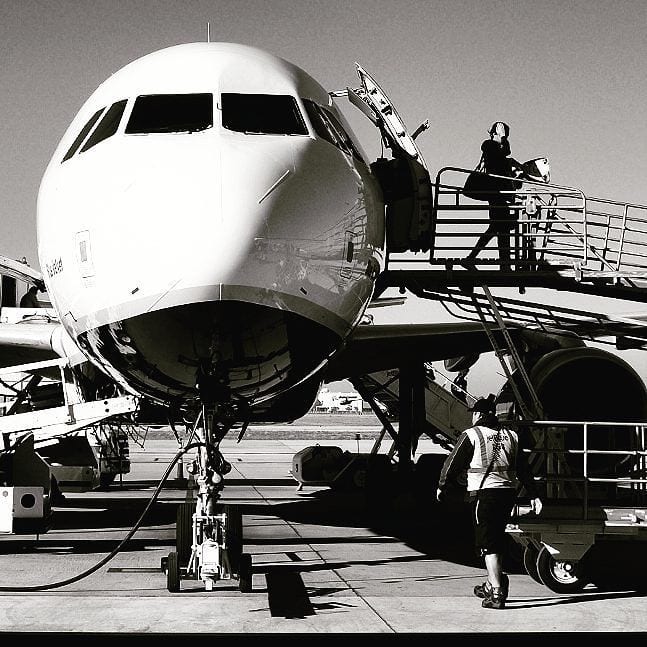
Well, we are back home in Texas now. Today we flew on our normal route from Long Beach to Austin on JetBlue airlines. We really like flying out of Long Beach because it is a small airport and hardly any traffic or lines. Especially compared to the craziness that is LAX! But this morning’s flight was delayed by 2 hours, so we arrived in Austin at 5pm… not really too big of a deal, and waiting at the airport was ok since we had sandwiches that my mom had made for us. Also, I had time to finish The Martian! What a great book! 👍

USA. California. Long Beach. 2015.

The flight itself was pretty good, and I spent the time reading and also reviewing and deleting photos from my camera. I like to pare down the photos I keep. In the past, I would just keep every single photo, even if they were similar. I might have 8 photos that are almost exactly the same just because it didn’t cost me anything to keep more than one. But now, I really enjoy minimizing down to just the essentials. That means keeping only the best photo of a series. (I might cheat and keep two sometimes!) It’s so liberating to jettison all the extra photos right away after taking them. I feel like the longer you hold onto all those extra files, the longer they stay in your mind and clutter up your thoughts. Just choose one or two and be happy with those!

USA. 2015.
USA. 2015.

So, we made it home, but Austin is cold! Tonight will drop into the 30s again… ❄ Please take care to stay warm!

-B

Traveling Lighter

Within the past year’s worth of traveling I have started traveling lighter, paring down the amount of stuff I take, and it has really improved the travel experience! Rewind to last year’s trip to Japan – I took my North Face backpack. It’s large enough that I had no trouble fitting in the proverbial kitchen sink. My thinking at the time is that I wanted a backpack that I could take anywhere. And that could fit my DSLR camera, lenses, and other electronics. My backpack would be a constant companion which I would take everywhere. Here’s a list of stuff I took in the backpack:

  • Tablet
  • Keyboard
  • Mouse
  • Kindle
  • Sony A77 DSLR
  • 16-50mm lens
  • 10-20mm lens
  • 100-200mm lens
  • 35mm lens
  • Spare battery
  • Cellphone
  • 2 Chargers
  • Extra cellphone battery
  • Assorted cables and card readers
  • Notebook
  • Pens and pencils
  • 2DS and 3 games
  • Earbuds and MP3 player
  • Water bottle
  • Small bag with medicine, bandaids, lipbalm, gum, etc.

The backpack was large, but handled all that gear with ease. The main problem was that it was HEAVY. Also, my camera gear was stuffed into the main compartment which meant that is wasn’t easy to take out and use. Plus, walking around in the summer heat in the city just wasn’t so practical. I still thought I wanted to bring all my stuff with me, but what a hassle it was!

I remember a previous trip to Japan. That trip I decided to just take a waterproof point-and-shoot camera. That was actually a super-fun vacation! And the small camera was a big part of it. Sure, the picture quality wasn’t close to my DSLR, but I enjoyed my trip quite a bit more. I didn’t have to worry about the weight or how to carry all my gear. I just put the camera in my pocket and was all set! Thinking back to that trip, I wonder why I didn’t connect my enjoyment of that trip and the small camera.

In April, I went on a business trip to Stockholm, Sweden. Because I thought this might be my one chance to go there, I should take my DSLR kit and big backpack again. I thought that I didn’t want to miss a great shot. I also took a small Fujifilm X-F1 compact camera as a backup. As you can probably see, camera gear is an important part of my travel kit…

This was a trip where I learned a lot about what kind of traveling I wanted to do in the future. Once again, the backpack was heavy and I rarely used the big camera rig. It was just too much of a hassle to keep at-the-ready. My compact camera was my camera of choice for most of the trip. In fact, the DSLR stayed in the hotel safe! And I have to say, I was happy with the results I got from the Fujifilm X-F1. The photos were more than “good enough”. And I didn’t have to worry about where to put my backpack when we went out for dinners. I left it at the hotel.

My next trip was a solo trip to California to visit my folks and see a concert. I was catching on to this “travel light” concept by this time! I decided to leave the backpack at home and just bring my small Patagonia bag and my Fujifilm X-F1. Also, I took my Kindle, Tablet, keyboard, various cables, card readers and chargers. Traveling lighter was definitely something I was starting to enjoy! And the photos turned out great! Hey, I don’t need the DSLR and all the lenses to enjoy photography!

On my last trip, I went to Stockholm again on business. This time I pared down even more. I left my tablet/keyboard at home. My camera was now my Fujifilm X100T. I also didn’t take a water bottle… why do I need that when there is water available wherever I went? I only needed one small USB cable and plug. My only personal computing device was my cellphone. (I did take a work laptop, but that was used exclusively for business) Here’s what was in my bag:

  • Fujifilm X100T
  • USB cable/plug
  • Spare battery
  • Pen
  • Notebook
  • Kindle
  • Earbuds
  • Cellphone
  • Cellphone battery
  • Small bag with medicine, bandaids, lipbalm, gum, etc.
  • Work laptop

My carry-on bag (the Patagonia Minimass) was so light! And when I was on my day off in Stockholm, I didn’t even carry my bag. Just the camera across my body, cellphone, and extra camera battery in my pants’ coin pocket. It was great not having a bag! And I enjoyed myself even more. My shoulders didn’t hurt, I didn’t have to worry about a bag in small shops or crowded museums. I’ve come to realize that having more stuff just gets in the way of having better experiences. It’s not only the distraction of the extra weight, but the distraction of extra things to think about. The less I have, the less I have to worry about. And that means more time and mental energy to spend on simply enjoying where I am. If you haven’t done so, try traveling lighter. I think you’ll be pleasantly surprised that you can get by with so little!