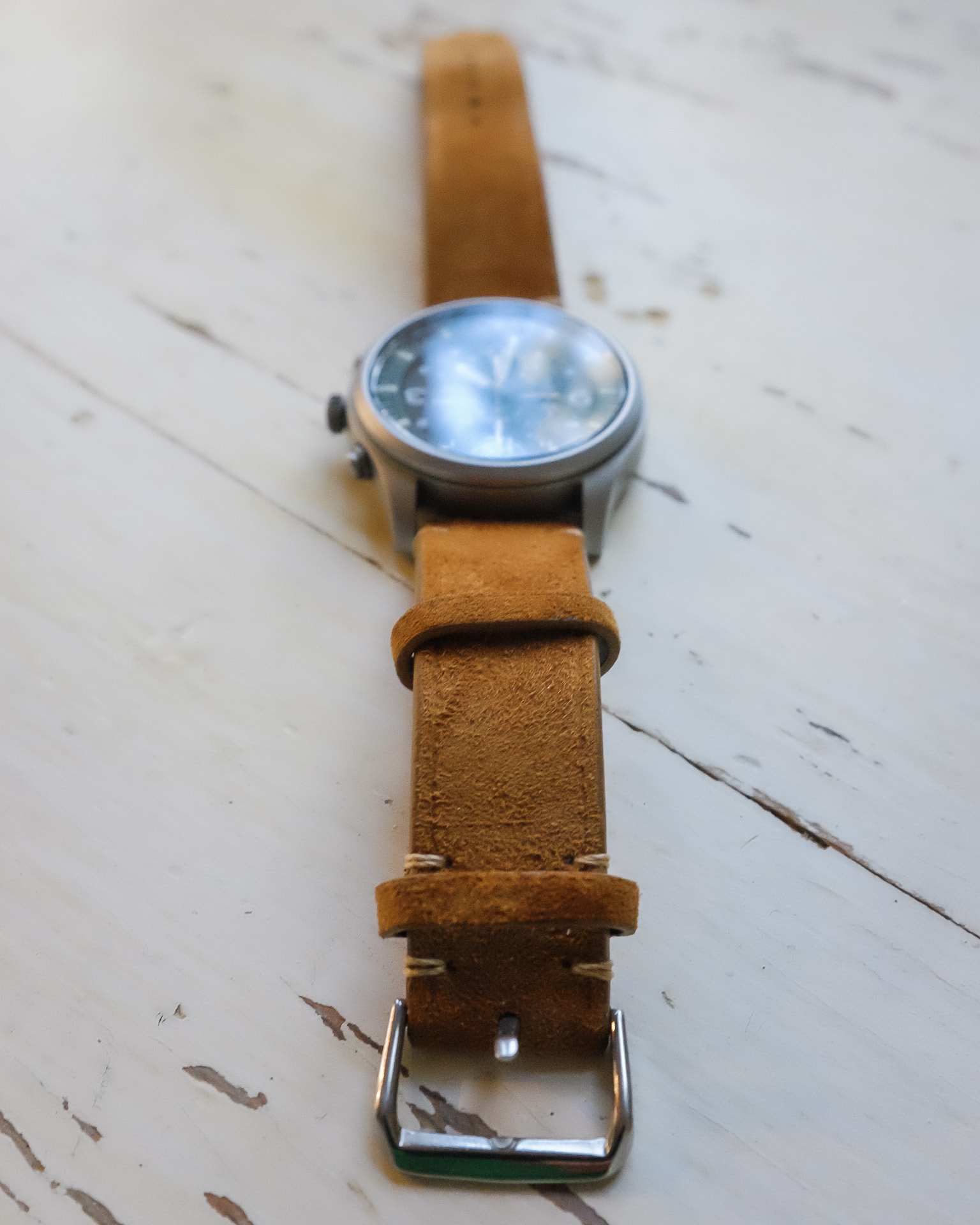
Comfy Suede Watchband

Photo info: FUJIFILM X100T, 19mm, f/5.6, 1/30 sec, ISO6400
“Suede Watchband” Cedar Park, 2020

I put this “Onthelevel” suede watchband on my Seiko SNDA27 chronograph and I think it’s the most comfortable watchband I have ever used. I think it also looks great! The brown leather leans towards orange, and matched the seconds hands on the watch nicely. The outside of the watchband is very soft and the look changes slightly depending on which direction the suede has been brushed. Although new, it looks immediately “lived in” and it gives the watch a cool vintage look. The inside of the watchband is a smoother texture, but still very soft and comfortable. I think this surface is more durable and a good design choice.
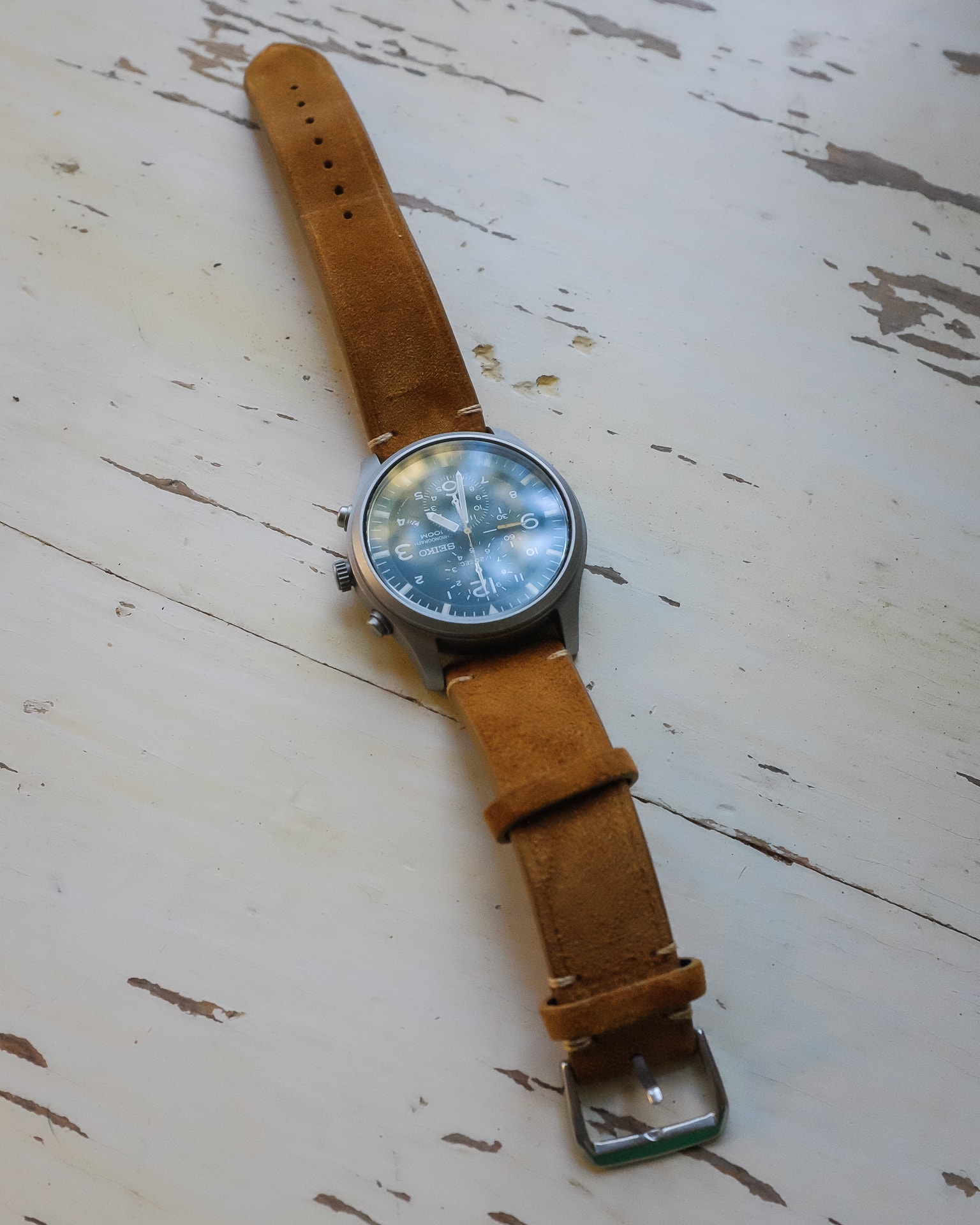
Photo info: FUJIFILM X100T, 19mm, f/5.6, 1/45 sec, ISO6400
“Suede Watchband” Cedar Park, 2020

The green/orange version of the Seiko Chronograph wasn’t my first color choice (I wanted the now hard-to-find black/red SNDA57 version), and so the watch has been on the second tier when I choose which watch to wear. But with the new watchstrap, I have fallen in love with the Seiko, and I’ve been wearing it for the past week.

Another thing I like about the watchband is that it is not a NATO/Zulu style strap. With those types of straps, the band threads through one watch pin, then under the watch itself, then under the other pin, so your skin never touches the back of the watch. But the suede watchband is a standard type which attaches to the pins, so I can feel the metal watch on my skin, and that feels good! It also means the watch is not as thick as when you use a NATO/Zulu strap. Very nice!

The only criticisms I have about this strap are that the stays (the loops) could be a millimeter or two wider, and I wish the buckle had a brushed or matte surface to match my watch. But those are just small things.

I’m now thinking of getting another suede watchstrap for my smaller Seiko SNK809 watch. The strap is just that comfortable to me. However, I am not considering using a suede strap on my Seiko SKX007 watch, as I feel that dive watches should not have leather watchstraps. That’s a bit of purist thinking, but it just feels right to me. 😄
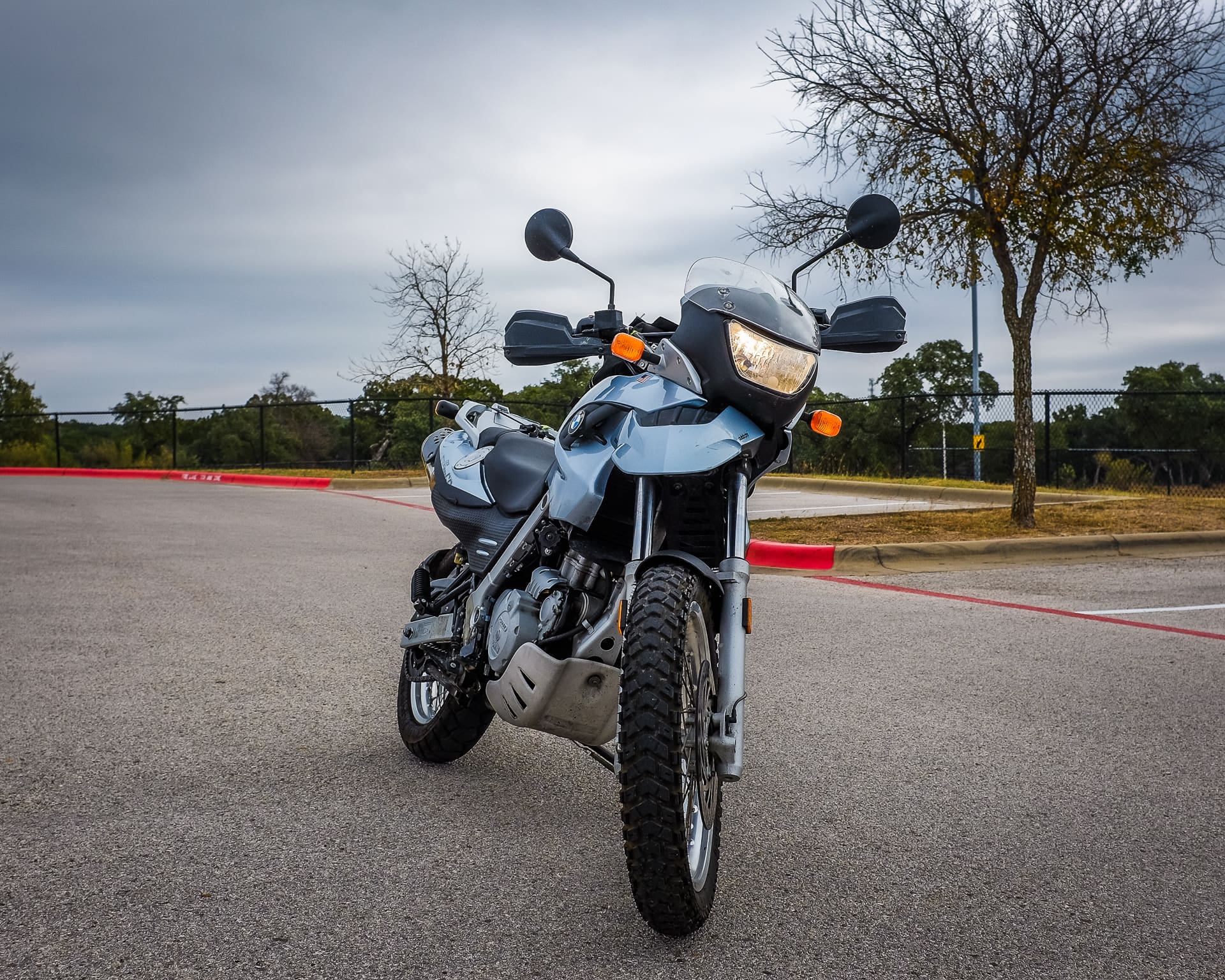
Two-Wheeled Therapy

Photo info: FUJIFILM X100T, 19mm, f/4, 1/1400 sec, ISO200
“Kiki” Cedar Park, 2020

Today I have the day off from work (actually the whole week!) so I decided to have a bit of fun riding my motorcycle around. Motorcycling is an intense experience, where all five senses are on overload. But I also spent some time practicing skills that need some work: u-turns at full lock. For these exercises, I went to the elementary school’s parking lot, which is perfect because I can use the parking space markers to gauge my progress.

My goal is to comfortably make u-turns in either direction, with the handlebars at their maximum position (full lock). The correct way to do this is to look at where you want to go (way over your shoulder), then turn the handlebars and initiate the turn. The trick is to keep the proper speed where you are slow enough that you can keep the handlebars at full lock, but with enough speed that you can lean over without dropping the bike. The secret is to use clutch control while revving the engine a bit to avoid stalling. If you are sensing that you are falling over, then you need to let out the clutch and let the engine power bring you up again. But not too much that you come out of the tight turn.

It’s a real skill to do this well, and only practice will allow you build up the muscle memory to feather the clutch to adjust the power without consciously thinking about it. It’s my one big apprehension when riding, so it’s worthwhile to take the time to make some progress! And even if I feel like I didn’t do such a good job with my skill training, I know that it is progress towards getting better!

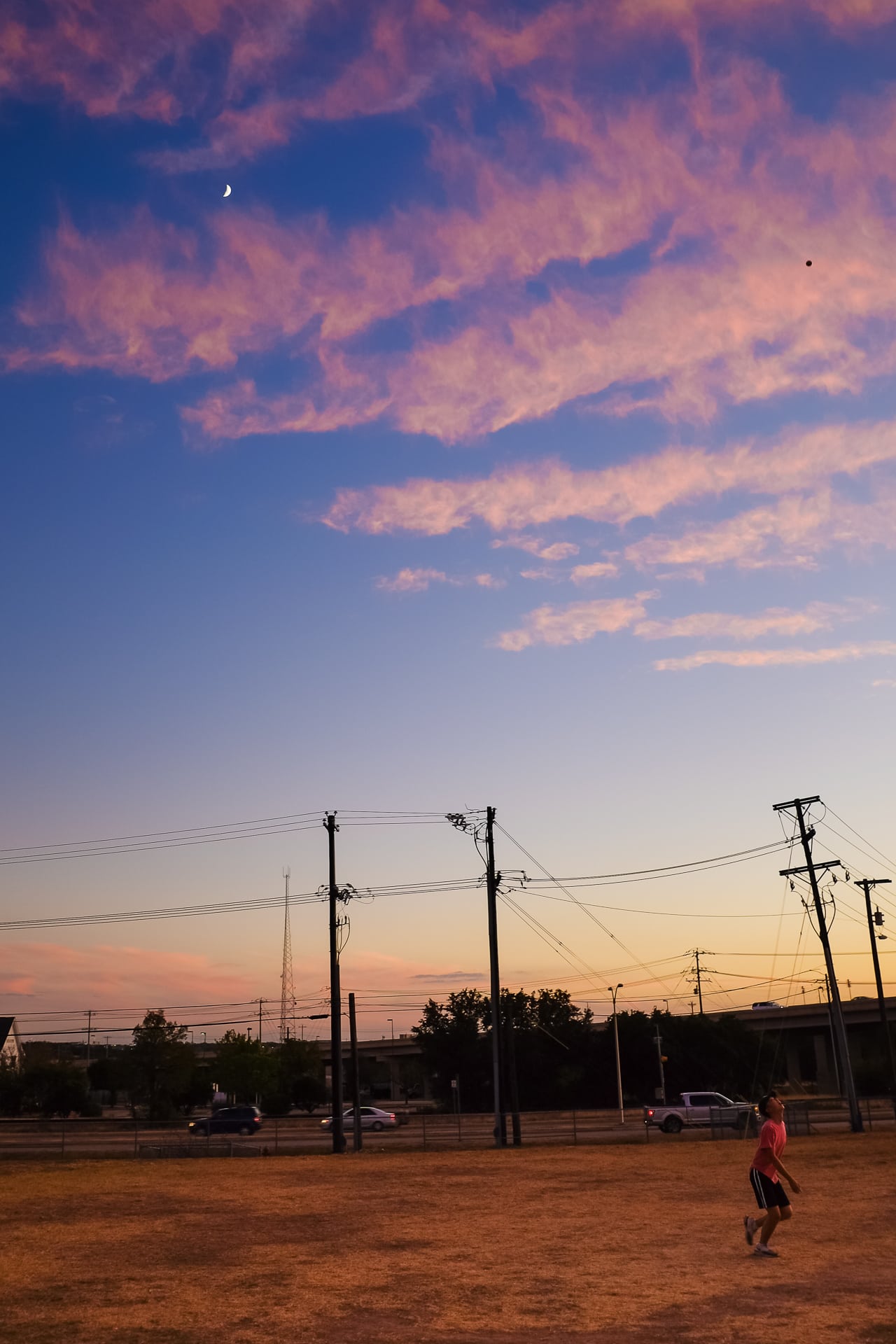
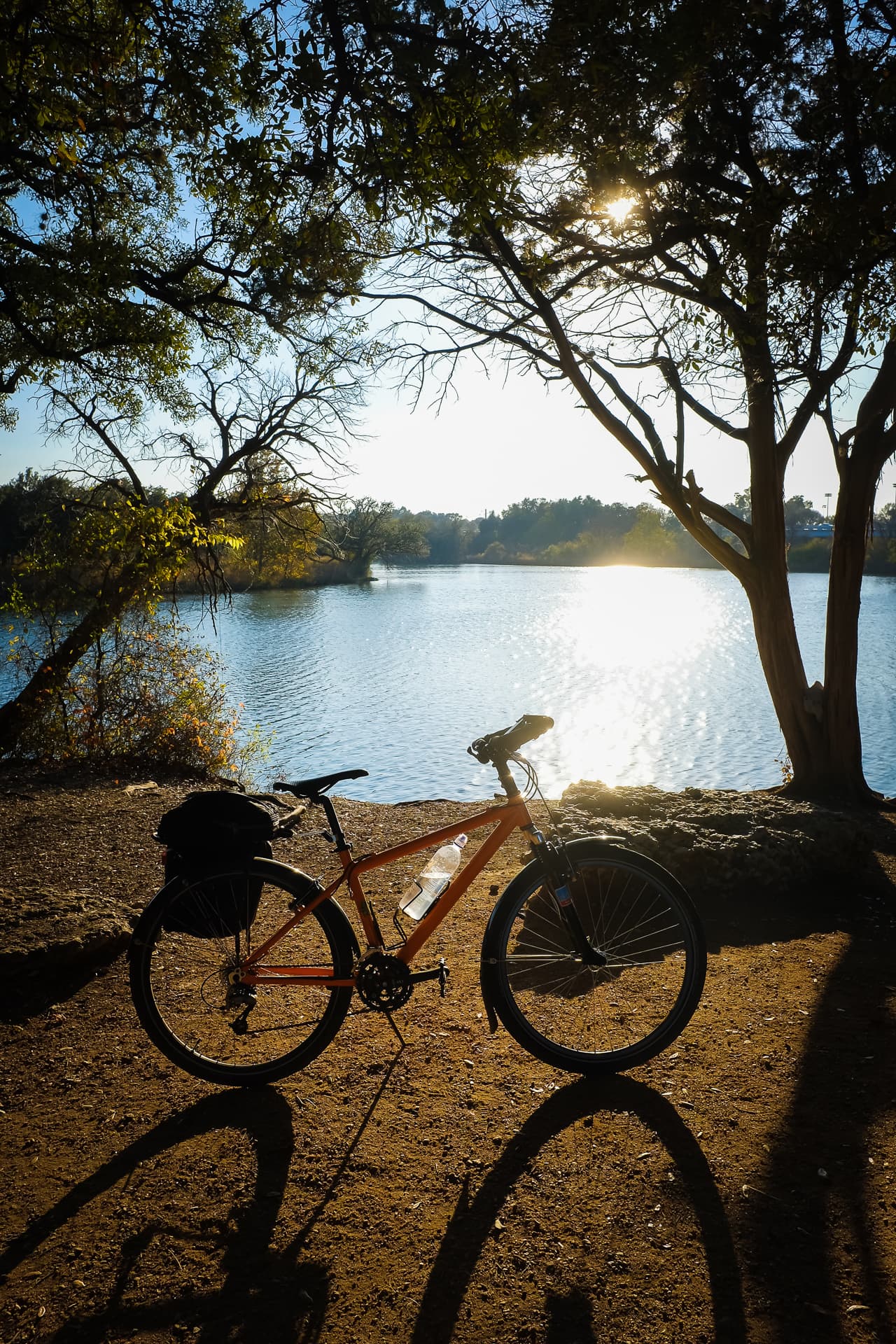
In the afternoon, I went for a nice bicycle ride to relax a bit. Bicycling is a wonderful activity. Super fun and good exercise! Plus you can clear your mind and see some great sights. I always feel great after a ride, even if it is just around the block to pick up the mail, but it’s a real treat when the route takes me to see sights like this:

Photo info: FUJIFILM X100T, 19mm, f/7.1, 1/600 sec, ISO200
“Mango” Cedar Park, 2020

I hope you had a nice day!

100% Mixed Webinar

Photo info: FUJIFILM X100T, 19mm, f/3.2, 1/100 sec, ISO1250
“Webinar” Cedar Park, 2020

I attended 100% Mixed 100% Nikkei – Experiences of Mixed Race Nikkei Webinar hosted by the JACL, in which the discussion centered around the experience of mixed-race people, and specifically those with Japanese ancestry as part of their makeup. I enjoyed it quite a bit, and especially the discussions that touched on where we fit in with today’s events surrounding racial inequality, the BLM movement, and the rise of white supremacist rhetoric in America. I didn’t realize (and I still need to explore) how the Japanese-American community was affected by the civil rights movements in the 60s, and became the “model minority” as a response to anti-blackness. It’s something that not a lot of people think about, but I think it’s worth exploring.

I’m happy that organizations like JACL exist and provide resources for helping Nikkei explore their roots. It’s refreshing to see and hear people of mixed race speak about their individual experiences that make up a collective experience that so many of us share, even though everyone’s present situations might be different distances from when our ancestors came to America. And it’s also wonderful to see people of different age groups too! There are many differences generationally, but we all are the same in that we are curious and want to know more, and share our experiences.

It seems to me that first-generation Asian-Americans share a stronger bond with each other, and with each successive generation, those bonds becomes weaker, or perhaps less-easily defined. Japanese-Americans (and Chinese-Americans) have been present in America for a relatively long time as compared to other Asian groups, so the Nikkei bonds have to extend a greater distance. And each generation may have additional ingredients added into the mix, so it’s harder to identify a dominant flavor. I’m not sure if that is a good analogy or not. At any rate, I think third-generation (Sansei) or fourth-generation (Yonsei) Japanese-Americans have less common identity to use to connect with each other as compared to first-generation Asian-Americans. It’s very complicated, yet fascinating.

I’m a Yonsei, so Bay and Koa would be Gosei (fifth-generation). But since Mariko is an Issei (first-generation), they could also be considered Nissei (second-generation). 🤷‍♂️

A 1.5 hour webinar is not nearly enough time to cover such a complex subject, but it’s a great start! I’m very happy that I attended. Thank you, JACL, for putting it together! Much more to learn…