A-Z Challenge – N

N is for “Nostalgic 懐かしい”

One of my favorite Japanes words is “Natsukashii” which means “nostalgic”. For instance, when talking with a friend and you reminisice about an old time, you will say “natsukashii”. Or if something spurs an old memory, you can say the same thing.

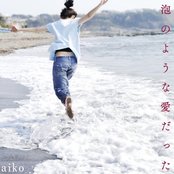
As I get older, I often have these moments where I remember something from log ago and I think back fondly about it. I was listening to some music from my library, and a song came on that always brings back a certain memory… it was 1996 and I was watching tv at my shared apartment in Tokyo and a commercial came on that had a song that I really liked. One of my housemates told me who it was (Sakamoto Ruichi and Fujitani Miki) and I told her that I really wanted to find that song. So a couple weekends later, we went to Tower Records Shibuya and at a listening station, we found that cd… Ten seconds into the song, the main melody came thru our headphones*, I looked at my friend and she looked at me and we both said, “that’s it!”. Needless to say, I bought that cd.

It’s so fun when natsukashii moments happen. I wish I could share memories better… if there were some sort of memory recorder, that would be amazing. I admire people who can illustrate on paper so much. If I could I’d love to documents some of these memories like that. Or writing as well… I wonder if it is something I should work on. It’s a worthwhile thing, I think.

But maybe these memories are so personal, that they will have no meaning to strangers. Which is why that shared experiences are so special. Now I want to get in touch with my friend to see if she remember that moment too.

*The listening stations were set up so with a pair of headphones for each station

A-Z Challenge – M

M stands for “Maps”

I’ve been kind of a map otaku ever since I was little. In my previous post, I talked about visiting the library when I was young, and one of the things I loved to look at there was the atlases and map books. These were the large books that were near the reference librarians and were items that you couldn’t borrow. But they were so fascinating to me! I actually have a bunch of maps I saved from National Geographic magazines that I had subscribed to. In fact, that was kind of the reason I had a subscription… because the Nat Geo maps were so nice! 🌐

These days, I like to explore using Google Maps, but it’s fun to look at paper maps still. I have a few road atlases, and my old Tokyo map that I used so much. I’ll never get rid of that one! It was my constant companion when I moved to Japan. A real life-saver.

Right now I am reading a book that I borrowed from the library called “On the Map” which is all about the history of maps (so far). It’s fascinating! I highly recommend it if you are a map otaku like I am. 😄

A-Z Challenge – L

L stands for “Library”

I’ve always enjoyed going to the library ever since I was little. My parents used to take us to the excellent Torrance Public Library, which was pretty huge, and really fun for a kid. The children’s section was upstairs on the second floor and I remember heading up the stairs that were just past the checkout desk and heading up to check out the cool books about dinosaurs or space or even just look at all the World Book encyclopedias.

As I sit here now typing this post, so many memories are coming flooding back to me… one of the strongest is of how the library smelled… for some reason the elevator had a distinctive odor… something industrial like oil or rubber. Anyways, I love that smell, but the only time I’ve encountered it is at that library. I wonder if it still smells like that after all these years… I’ll definitely have to check the next time I am in Torrance. I am curious to see if the rock and gem collection is still on display at the entrance to the library. That was always a treat to see those cool geodes!

But there are many things that I cannot remember… like the exact layout of the library… I think because these are children’s memories, I don’t recall a lot of the sections that had the grown-up books. Those areas are all very hazy in my mind. Which is odd, because when I was in high school, I had a part time job at the same library and had to shelve books in all sections. So I should have strong memories. I wonder why this is.

Anyways, the local library that we visit now is much smaller than that of my childhood, but it is top-notch. I always find something good to read there! And there is a pretty good manga section, plenty of dvds to borrow, and they even have ebooks that you can borrow by browsing the catalog online from anywhere! It’s such a great service. (you download the books to your Kindle)

Anyways, I am so happy that we have access to another wonderful library. With so much to be cynical about in the world these days, the public libraries have a kind of purity about them that is comforting. It’s like a reminder that there is still good in this world. ☺️


A-Z Challenge – K

K stands for “Konmari”

Lately I’ve been reading “The Life-Changing Magic of Tidying Up: The Japanese Art of Decluttering and Organizing” by Marie Kondo which is about decluttering your house and improving your life. The term “Konmari” comes from her first and last names and it’s kind of a Japanese way to make nicknames. For instance, Takuya Kimura from SMAP is known as “Kimutaku”, and pitcher Kenta Maeda is “Maeken”.

But nickname aside, this book is the latest in a string of books about decluttering and minimalism that I have read. I first became interested in decluttering about 15 years ago when I read “Clear Your Clutter with Feng Shui” by Karen Kingston. It was life-changing. I started throwing away so many things that I had kept that I did not need anymore. It felt great! I think I was reading the book late at night and got so motivated that at 2AM I found myself in my closet piling up old clothes to take to Goodwill!

The Konmari method is a little different, but the general idea is the same… only keep what gives you joy in your life, and discard the rest. And for the things you do keep, make sure they have a place to go. When your home is in order, you will be able to focus on the things in life that make you happy. Of course, the book is a lot more detailed about the techniques that she teaches to her clients. I am only about halfway through the book, and already it’s highly motivating and inspirational.

If you don’t know about decluttering, this is a good place to start!

A-Z Challenge – J

J stands for “Jyama” (じゃま)

I was thinking of a word that starts with J that we say often in my family and the Japanese word “Jyama” (sounds like Jah-mah) came into my mind. And it would usually be followed by an exclamation point because it’s usually said to someone when they are in the way. If you say it to someone with a bit of feeling behind it, it can mean, “Get out of my way!”

I normally hear “Jyama!” from my wife when I am bothering her in the kitchen, trying to steal food that she is making, or if I am getting something out of the fridge while she needs to get in there too. 😜

Anyways, that’s a quick Japanese lesson for today. My Japanese comprehension is not so great, but I do know when my wife wants me to get the heck out of her way!

A-Z Challenge – I

I stands for “Ice”

Here’s a non-interesting fact about me: I rarely put ice in my water. My body tends to get cold very easily and drinking cold water makes it unbearable. I cannot sit still when I am cold like that, so whenever I have water, I skip the ice. In fact, I prefer drinking water that is room temperature, which I feel just goes down easier and hydrates me more quickly. I am not sure there are health benefits to drinking warmer water, but some of the theories are interesting! And I think, in a small way, reducing the demand on ice saves on energy and resources.

The only time I will drink ice-water is if it is served to me at a restaurant or if I need to cool down on a hot summer day, but other than that, room-temperature is best!

A-Z Challenge – H

H is for “Humanism”

What is Humanism?

An outlook or system of thought attaching prime importance to human rather than divine or supernatural matters. Humanist beliefs stress the potential value and goodness of human beings, emphasize common human needs, and seek solely rational ways of solving human problems.

and

Humanism is a democratic and ethical life stance, which affirms that human beings have the right and responsibility to give meaning and shape to their own lives. It stands for the building of a more humane society through an ethic based on human and other natural values in the spirit of reason and free inquiry through human capabilities. It is not theistic, and it does not accept supernatural views of reality.

This is pretty much where I am, and where I have always been. I think it’s a healthy place to be.